
How to Check Criminal History in Lancaster County
No single official database contains every Lancaster County criminal record. Begin with the record closest to the event. The Trial Court Public Index is the best first stop for filed General Sessions and participating lower-court cases. The Detention Center portal addresses recent booking or custody. SLED CATCH is a separate statewide name check built from criminal-history information reported to the state repository. An incident report remains with the agency that wrote it.
Names, dates of birth, aliases, an approximate event date, and a case or booking number all help distinguish similar records. Search spelling variants. Then compare the charge shown at booking with the charge filed in court and the final disposition. Missing information can reflect a reporting delay, a municipal case outside the index, a record without an online image, or an event that never progressed to prosecution.
- Search the Lancaster Trial Court Public Index by party name or case number.
- Check the county jail portal for a recent booking or current local custody.
- Ask the arresting agency for its incident or arrest report.
- Use SLED CATCH for a fingerprint-supported South Carolina name check.
- Order a clerk-certified copy when the court document itself is needed.
Note: The court clerk is the direct source for court copies, while county FOIA staff handle nonexempt agency records rather than judicial files.
Four Lancaster County Record Systems
Lancaster County records divide into four practical systems. The court index is case-centered. The jail portal is custody-centered. An agency report is event-centered. CATCH is identity-centered and statewide. A person can appear in one system but not another. For example, an incident may produce a police report without an arrest, and an arrest charge may later be changed, dismissed, or never filed in court.
The official Lancaster Trial Court Public Index screen shows the county search entry used for case records.
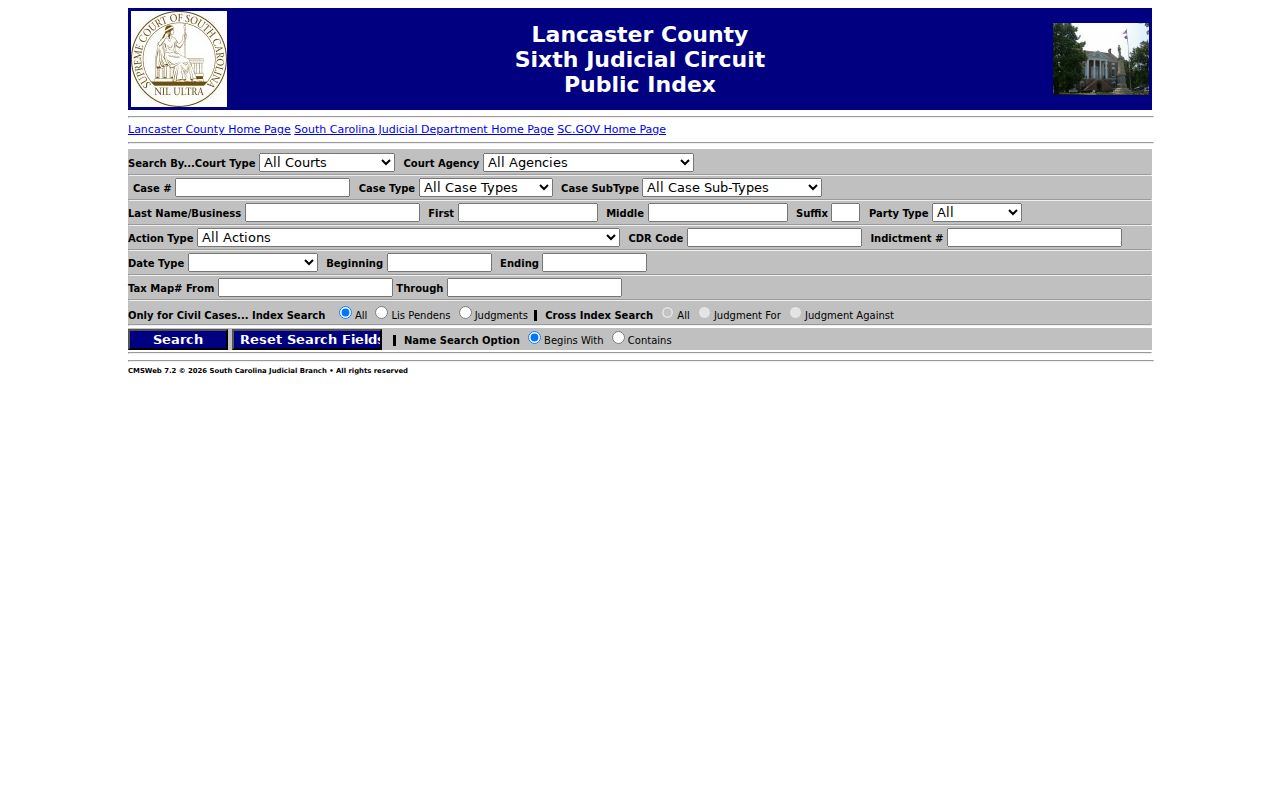
That form leads to dockets and dispositions, not a real-time warrant or custody confirmation. Use each system for its own purpose.
| Official channel | Best question | Main limit |
|---|---|---|
| Trial Court Public Index | Was a case filed, and how did it end? | Some municipal matters and document images may be absent. |
| LCDC Inmate Search | Is there a local booking or current custody entry? | Custody data does not prove guilt. |
| Agency records unit | What did the responding officer report? | Protected details may be redacted. |
| SLED CATCH | What South Carolina history matches the submitted identity? | Wanted and registry data are excluded. |
Official South Carolina Background Checks
SLED CATCH is the public state channel for reviewing a South Carolina name-based criminal history. As of August 8, 2026, a standard report costs $25 plus a $1.43 online service fee. The result relies on fingerprint-supported submissions made to SLED, so aliases, birth-date errors, missing fingerprints, or unmatched dispositions can affect the match. It does not contain wanted-person or sex-offender registry information.
Mail is also available. A requester sends the CATCH form, a $25 business, certified, or cashier's check or money order, and a self-addressed stamped envelope to the SLED Records Department. The mail route has no online service fee. SLED has not accepted public walk-ins for record checks since 2008. Fingerprint checks are more reliable, but SLED processes them only for purposes authorized by law. IdentoGO Print and Go can capture cards by appointment, though the research did not confirm a Lancaster County storefront or local fee.
The SLED CATCH entry page displays the product scope and current fee notice.
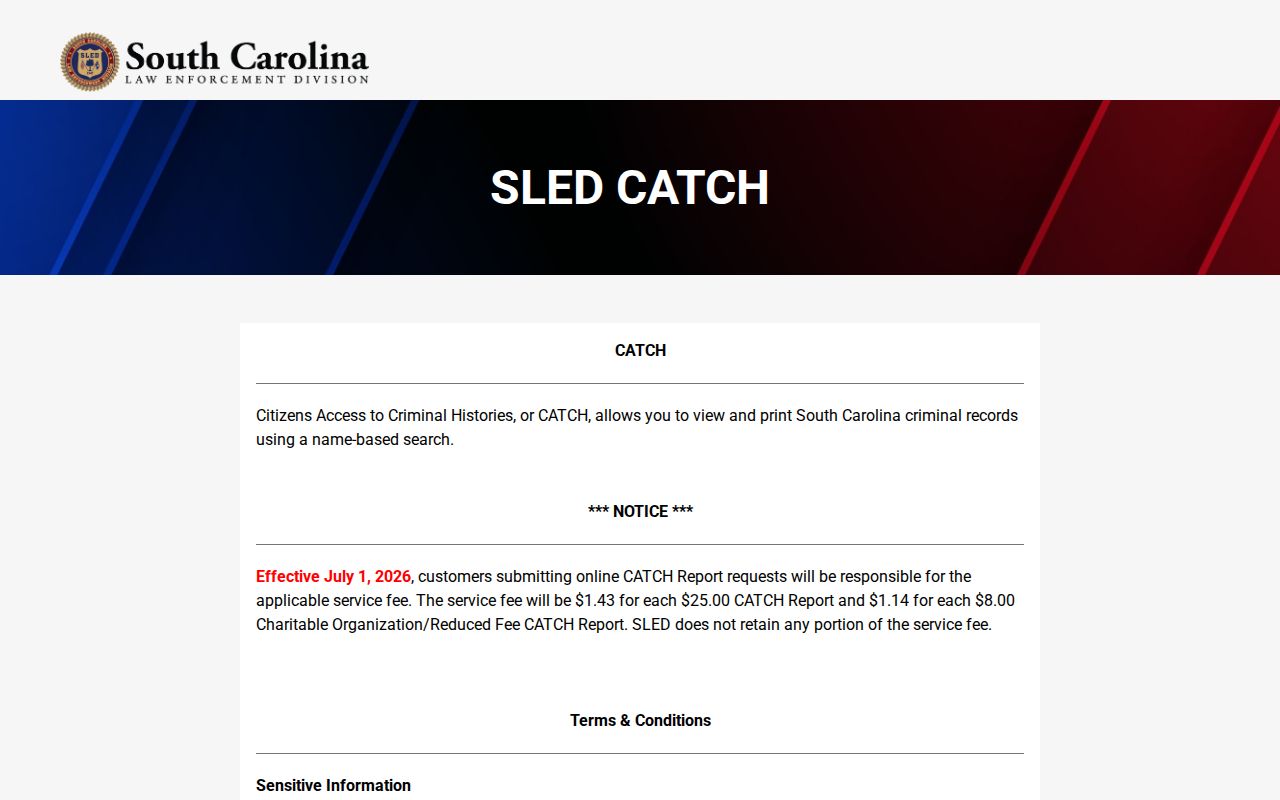
Use CATCH for state repository history, then return to Lancaster County courts for the underlying docket or certified judgment.
Lancaster County CATCH Record Fields
CATCH requires enough data to run a meaningful name match. Last name, first name, and date of birth are required. A Social Security number is optional and is searched if supplied. The user must also choose guest or account access and accept the portal terms. A starts-with name match can help with spelling, but it can also return more than one possible subject.
The official CATCH user-type screen shows the guest and account routes before a Lancaster County criminal record query begins.
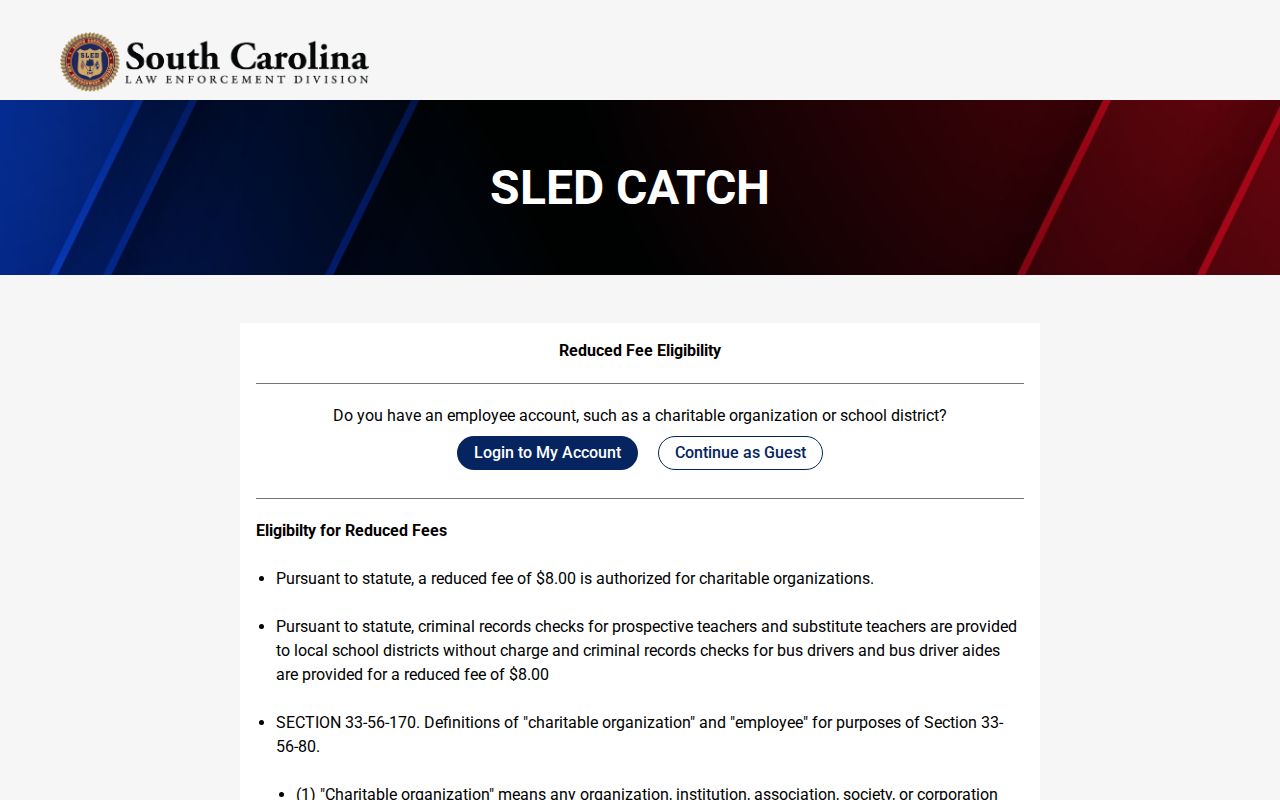
If the system reports that special processing is required, do not pick the nearest-looking identity. Follow SLED's process. For an error in your own record, request the SLED challenge packet and use fingerprints where identity is disputed.
| Field | Required | How it works |
|---|---|---|
| Last Name | Yes | Starts-with text match |
| First Name | Yes | Starts-with text match |
| Date of Birth | Yes | Identity match criterion |
| Social Security Number | No | Searched only if provided |
| User Type and Terms | Yes | Guest or account route plus acceptance |
Types of Criminal Records
Lancaster County criminal records are created at several stages. A sheriff or police incident report records an allegation and officer response. Detention staff create a booking and custody entry after intake. Magistrate, Municipal, or General Sessions staff create complaints, warrants, indictments, docket events, orders, and dispositions. SLED builds the state history from submitted fingerprints and reported court results.
Other sources answer narrower questions. SCDC covers people currently sentenced to state prison. SCDPPPS covers current probation, parole, and related community supervision. The South Carolina Sex Offender Registry is a separate public system. A Highway Patrol collision report follows the SCDMV route, not the sheriff's records desk.
- Incident and arrest reports: agency accounts of an alleged event and enforcement response.
- Booking records: intake, identifiers, custody, charges, and bond data where published.
- Court case files: filed charges, events, hearings, outcomes, orders, and sentences.
- Repository histories: South Carolina identity-linked cycles reported to SLED.
- Custody and supervision records: local detention, state prison, probation, or parole status.
Lancaster County Jail Custody Records
The Lancaster County Detention Center portal is the county's official recent-booking search. It accepts a name, subject number, booking number, date range, custody checkbox, and housing facility. The "In Custody" filter is checked by default. Unchecking it may expose older portal entries, but a result still describes booking or detention rather than a conviction. Call the jail for current status because custody can change quickly.
The Lancaster County inmate search displays those booking controls without requiring an account.
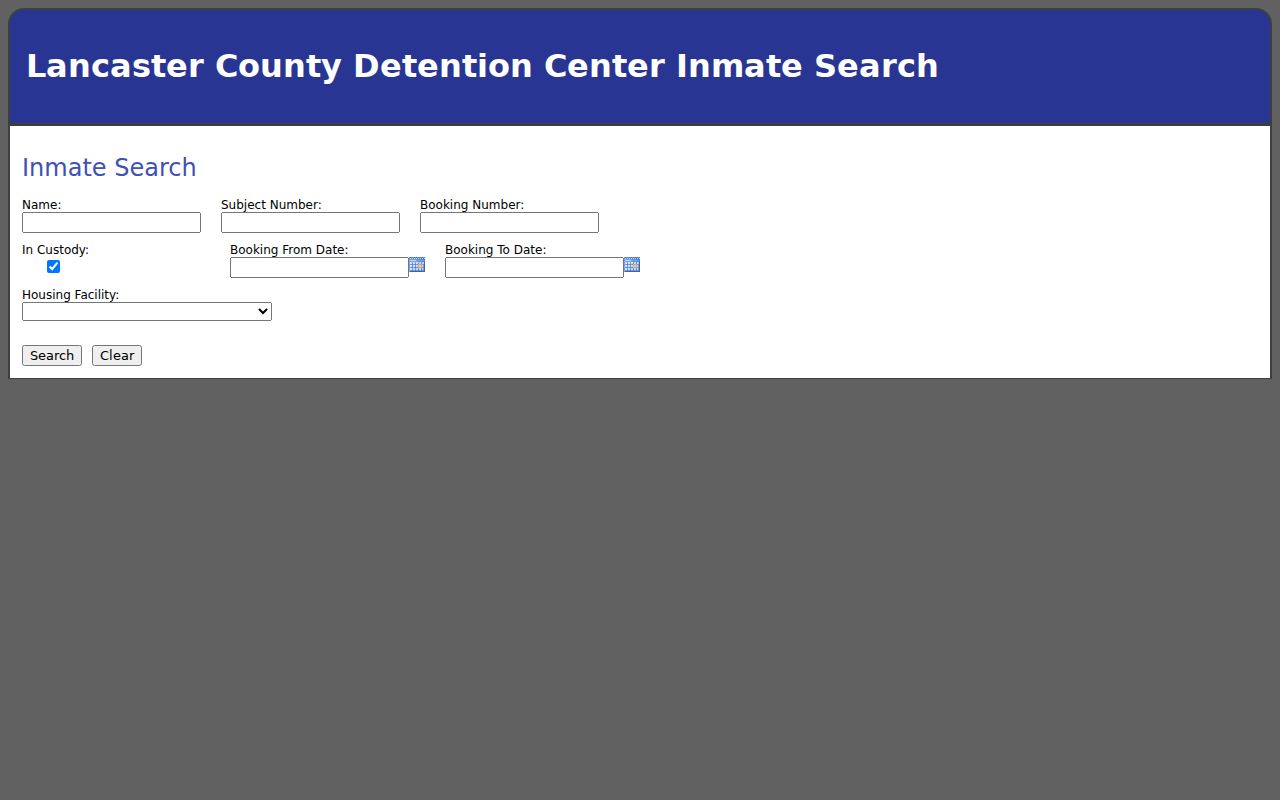
The Detention Center holds pretrial and unsentenced people, short sentences under 90 days, and full Family Court sentences. A sentenced person transferred to SCDC belongs in the state locator instead.
Lancaster County Detention Center
1941 Pageland Highway
Lancaster, SC 29720
803-283-2084
Sheriff's Records Department
1520 Pageland Highway
Lancaster, SC 29720
803-283-3388
What a Lancaster County Criminal Record Shows
The fields depend on the custodian. A repository rap sheet ties names, aliases, date of birth, a SLED identifier, arrests, charges, dispositions, and sentences to an identity. A court file ties a case number to parties, attorneys, charges, hearings, filings, orders, outcome, and sentence. A booking entry centers on intake, custody, facility, charges, and bond data. None is a complete copy of the others.
Read status and disposition with care. Pending means no final result. A dismissal ends a charge without conviction. A nolle prosequi, often shown as "nol pros," means the prosecutor stopped pursuing that charge. An acquittal is a not-guilty judgment. A conviction is a guilty adjudication. A bond forfeiture can still matter under South Carolina expungement law.
| Name and Identifiers | Name, aliases, date of birth, and identity numbers where that system lawfully publishes them. |
|---|---|
| Arrest or Booking Data | Agency, event or intake date, booking number, facility, and custody status. |
| Charges and Statutes | Alleged or filed offense descriptions and statutory references. |
| Disposition | Pending, dismissed, nol prossed, acquitted, convicted, or another recorded outcome. |
| Sentence | Custody, probation, fines, restitution, or other court-ordered terms where public. |
| Supervision Status | Current state supervision appears through SCDPPPS rather than the jail or SCDC search. |
Lancaster County Warrant Record Checks
Lancaster County has no official public online warrant list. The Sheriff's Office will not discuss an outstanding warrant by phone. A person who believes a warrant exists must visit the sheriff's lobby and speak with a duty officer. That policy is a safety measure, not an invitation to rely on an unofficial people-search site.
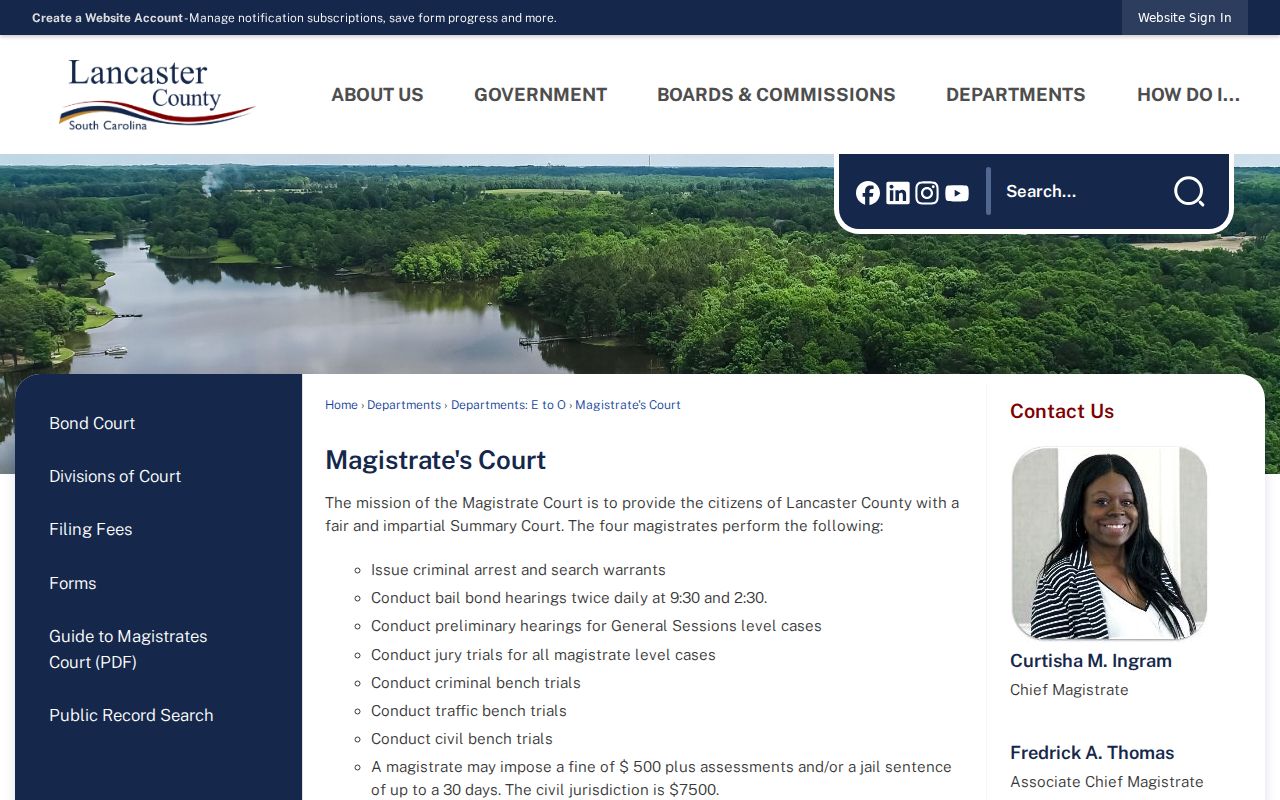
Centralized Magistrate Court issues arrest and search warrants and can address its own process. Lancaster Municipal Court handles city bench matters. The Public Index may show the case behind a warrant, but it is not real-time confirmation. Nonexempt warrant information may also be requested through the county process, though unserved, sealed, or active-investigation material can be withheld.
The Centralized Magistrate Court information page identifies the lower court's warrant, bond, and preliminary-hearing role.
Verify any jury-duty warrant demand at a real court or law-enforcement office. Lancaster County officials do not demand confidential information or money by phone for such warrants.
Public Access Laws
The South Carolina Freedom of Information Act opens nonexempt agency records for inspection, copying, or electronic delivery. It does not turn every police, jail, court, and SLED record into one database. Lancaster County gives special walk-in access during business hours to public incident information from the preceding 14 days. Court records follow Judicial Branch access, while CATCH operates under a separate criminal-history dissemination statute.
Limits are targeted. Agencies may redact material when release would harm an active investigation, a fair trial, confidential sources, techniques, privacy, or safety. Body-camera recordings are excluded from ordinary FOIA status and use a separate statutory court process. Juvenile information, protected victim details, sealed investigative files, and expunged material are also restricted.
Key Statutes:
S.C. Code §§30-4-10 through 30-4-50 establish public inspection rights, response rules, fee limits, and law-enforcement exemptions.
S.C. Code §23-3-115 authorizes SLED's individual state criminal-history report and bars wholesale database dissemination.
S.C. Code §17-1-40 requires destruction of qualifying dismissed or not-guilty arrest records while permitting sealed investigative retention.
S.C. Code §23-1-240(G)(1) places body-camera data outside the ordinary FOIA public-record route.
Lancaster County NextRequest Records
When an agency portal does not display the needed record, Lancaster County uses NextRequest for county and sheriff FOIA submissions. A requester describes identifiable records, receives an electronic invoice, pays online when charges apply, and downloads released electronic files through the account. Mail, fax, and the sheriff's paper form remain alternatives. Court copies should still go to the appropriate clerk.
The Lancaster County NextRequest portal shows the submission workflow for nonexempt county and sheriff records.
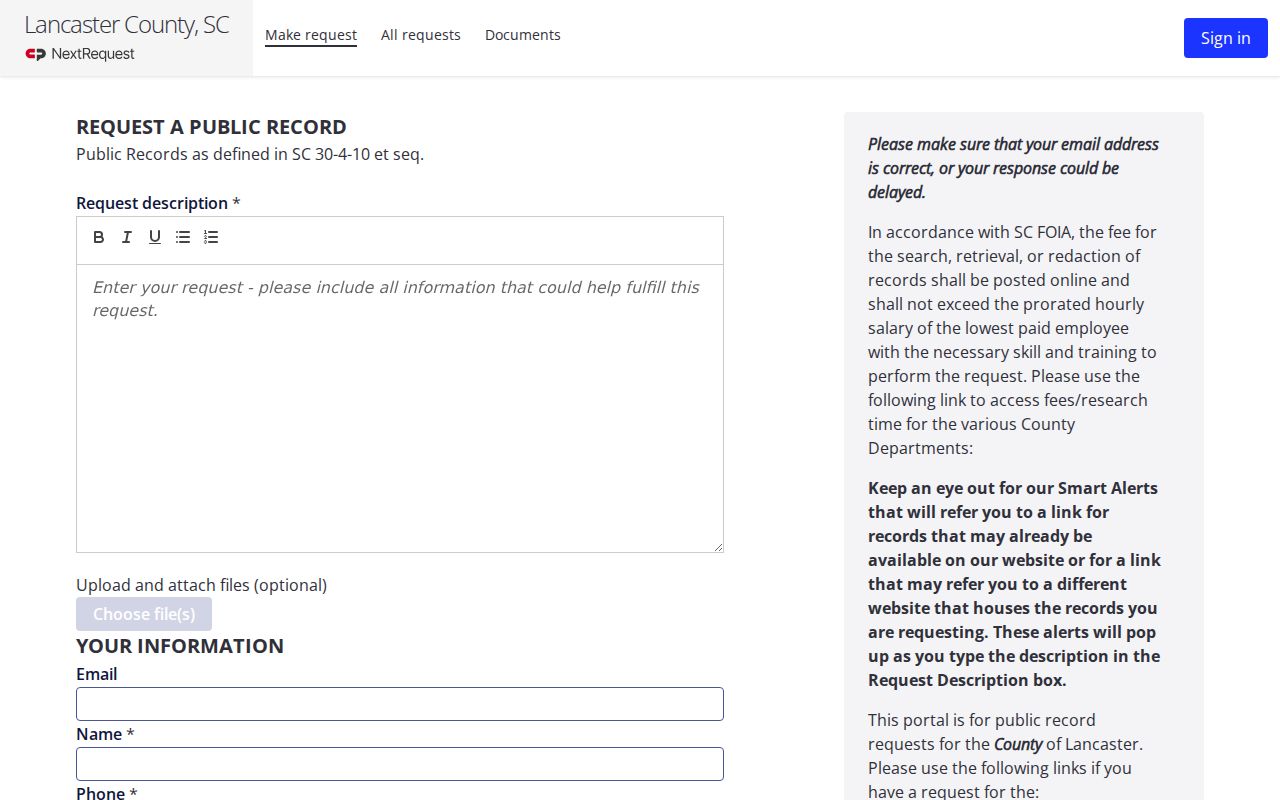
As of August 8, 2026, search, retrieval, and redaction cost $25 per hour; paper copies cost $0.22 per page; a disc costs $1.25; and a flash drive costs $4.50. Postage is added at the current rate. The county may require up to 25 percent of the estimate as a deposit and full payment before release.
The county's FOIA rules and fee page supplies the access limits, response periods, and published charges.
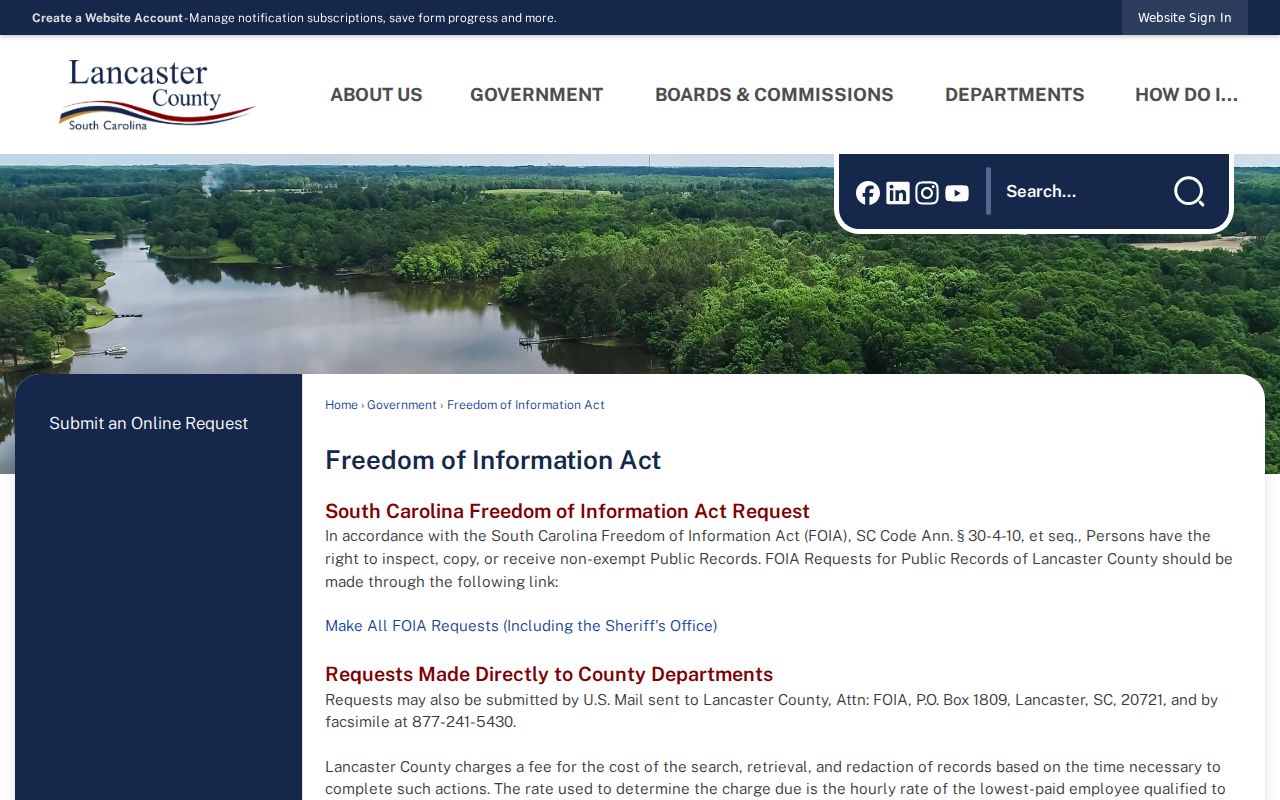
That official page also confirms the short walk-in path for recent public incident information, which may avoid a full written request.
| FOIA item | Published charge |
|---|---|
| Search, retrieval, and redaction | $25 per hour |
| Hard copy | $0.22 per page |
| Disc | $1.25 |
| Flash drive | $4.50 |
| Deposit | Up to 25% of estimated cost |
Sealed, Expunged & Restricted
South Carolina restricts juvenile records, protected victim and minor identities, sealed investigative material, confidential identifiers, and expunged files. An eligible dismissal, discharge, or not-guilty result can support destruction of associated arrest, booking, warrant, mugshot, and fingerprint records under §17-1-40. Yet dismissal alone does not automatically clear every database. The legal route and follow-up verification still matter.
Sixth Circuit handles most Lancaster County General Sessions applications. Eligible paths described by the local solicitor include certain dismissed or nol-prossed charges, completed diversion, a first qualifying summary conviction after the required wait, and specified Youthful Offender matters. DUI is not eligible. A dismissed Magistrate case can be initiated through the court after the local waiting period.
Most eligible conviction routes carry separate $250 solicitor, $35 clerk, and $25 SLED fees. Nonconviction expungements have no fee. After SLED receives an order, allow about four weeks and buy a new CATCH report to verify the result.
Sixth Circuit Expungement Records
Lancaster County sits in South Carolina's Sixth Judicial Circuit. The local expungement office is at 104 North Main Street, with mail sent to PO Box 607, Lancaster, SC 29721. The office can be reached at 803-416-9367. It checks eligibility, obtains SLED verification and required signatures, and routes the order to the agencies that must remove qualifying records.
A mismatch after completion needs proof. SLED directs the person to mail a certified true copy of the order, a CATCH report purchased within 30 days, and a self-addressed stamped envelope to its Expungement Department. When CATCH and the court index disagree for other reasons, compare the court's certified disposition with the repository history and use SLED's challenge process for your own record.
- Disposition
- The final or current outcome recorded for a charge.
- Nolle prosequi
- A prosecutor's decision to stop pursuing a charge.
- Expungement
- Statutory destruction or removal of qualifying records, with limited nonpublic retention where law permits.
- SID
- The SLED state identification number tied to fingerprint identity.
Criminal Records by City in Lancaster County
A place name does not always reveal the records office. Lancaster operates its own police department and Municipal Court. Kershaw contracts with the Lancaster County Sheriff's Office and uses Centralized Magistrate services. Van Wyck also relies on county law enforcement, and no independent municipal court portal was located. These city routes explain where an incident report, booking, or local docket begins.
Lancaster Criminal History
9,119 in the official ranked series. City police and Municipal Court share the East Arch Street public-safety site.
Kershaw Criminal History
2,321 in the official ranked series. Sheriff deputies provide contracted policing and county Magistrate services.
Van Wyck Criminal History
1,080 in the official ranked series. County sheriff, jail, and lower-court channels are the documented fallbacks.
The figures come from the consistent 2019 South Carolina Revenue and Fiscal Affairs estimate series used to rank incorporated places. They are not current population claims.
Lancaster County Supervision and Prison Records
Current probation and parole records belong to the South Carolina Department of Probation, Parole and Pardon Services. Its search accepts combinations of first name, last name, SID, county, and birth year. Data reflects the prior day, so the Lancaster field office should confirm current-day status. A court docket may show a probation sentence, but SCDPPPS confirms whether state supervision remains active.
The SCDPPPS offender search shows the fields used to find Lancaster County supervision records.
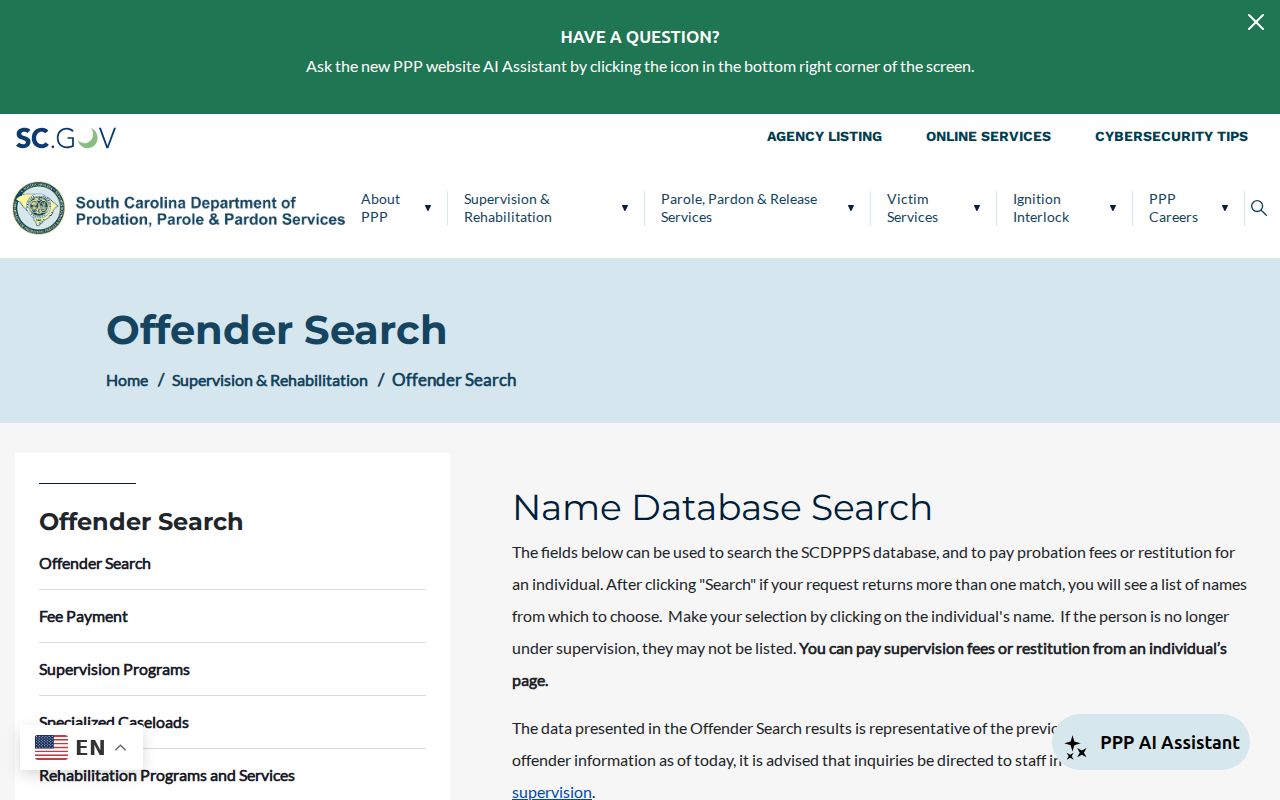
That system is separate from prison custody. The SCDC Inmate Search disclaimer explains that the state locator covers people currently sentenced to and incarcerated in SCDC.
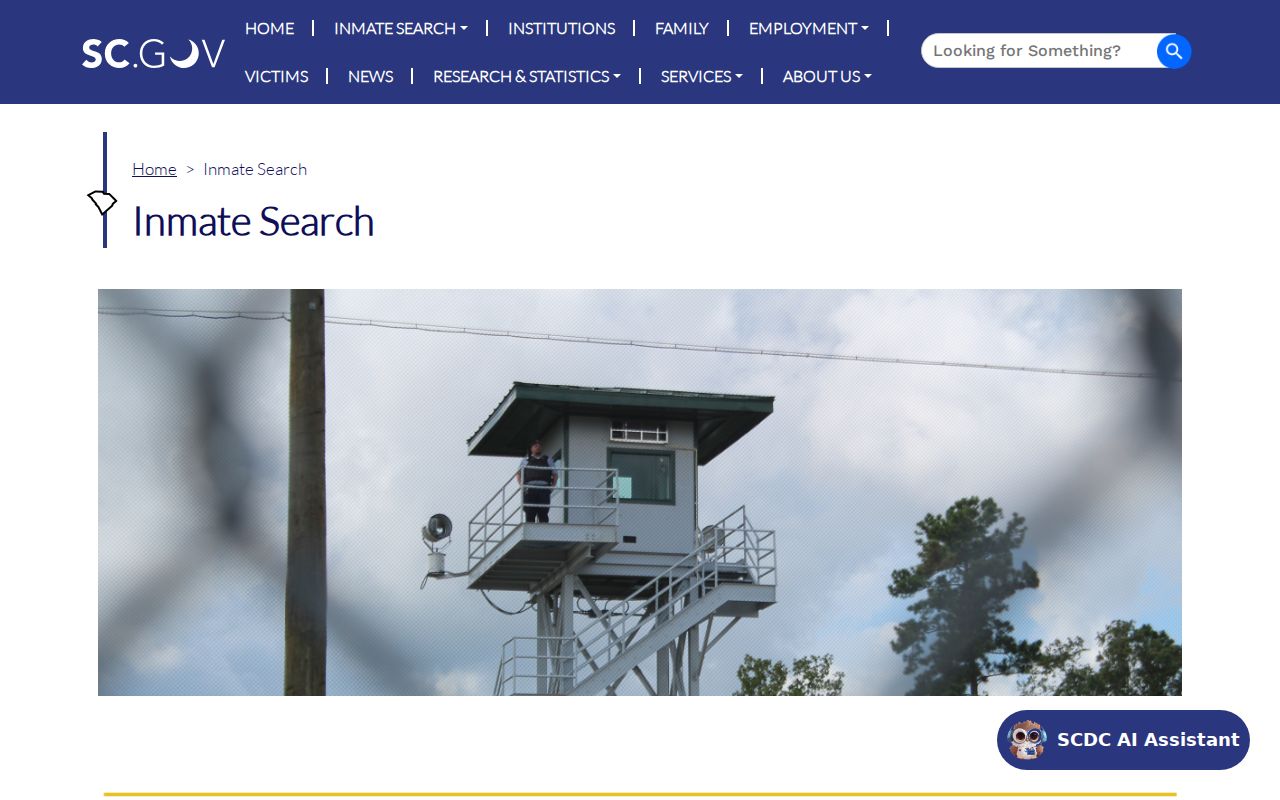
SCDC data reflects the previous midnight and excludes county detainees and people on community supervision. Use the Detention Center for local custody, SCDPPPS for supervision, and SCDC for a state prison sentence.