
Criminal Cases in the Lancaster County Courts
Lancaster County criminal court cases split across three main trial forums. The Court of General Sessions, part of Circuit Court in the Sixth Judicial Circuit, hears felonies and other higher criminal matters. Centralized Magistrate Court issues warrants, sets bond, conducts preliminary hearings, and tries county summary criminal and traffic charges within its authority. Lancaster Municipal Court keeps city ordinance, traffic, and summary-offense files. Kershaw uses the county Central Magistrate system rather than a separate town court.
The filing court controls the official case file. General Sessions records are kept by the Lancaster County Clerk of Court at 104 North Main Street. A lower-court record may instead require the Magistrate or Municipal clerk. Court files track prosecution, not just the first police allegation. That makes the docket the right place to test whether an arrest led to filed charges and how each charge ended.
The active courthouse places several parts of the Sixth Circuit process under one roof. The Clerk is on the first floor, Circuit courtrooms are on the second, and the Solicitor and Public Defender are on the third. That layout can simplify a Lancaster County case inquiry, but each office still has a separate role. The Clerk maintains and copies the docket. The Solicitor controls General Sessions prosecution and trial scheduling. The Public Defender represents eligible appointed clients. None of those counters is the source for the sheriff's incident report or the Detention Center booking entry.
Choosing a Lancaster County Criminal Court
A court name on a ticket, bond paper, or prior notice is the best routing clue. When that is missing, match the type and location of the matter before calling a counter. Each Lancaster County court answers a different part of the record trail, and the free Public Index does not guarantee that every municipal matter appears.
| Court | Criminal role | Official contact |
|---|---|---|
| General Sessions | Felonies and higher offenses | 104 N Main St; 803-285-1581 |
| Centralized Magistrate | Warrants, bond, preliminaries, county summary cases | 761 Hwy 9 Bypass E; 803-283-3983 |
| Lancaster Municipal | City ordinance, traffic, and summary cases | 405 E Arch St; 803-285-7622 |
| Kershaw matters | County Central Magistrate services | Use the Centralized Magistrate contact |
The index is a starting point, not the whole Lancaster County criminal case file. Save the court name and case number before asking a clerk for an official copy.
The official Lancaster courthouse directory shows the county court offices and their contacts. Its view of the court structure helps readers choose the custodian before seeking a docket or copy.
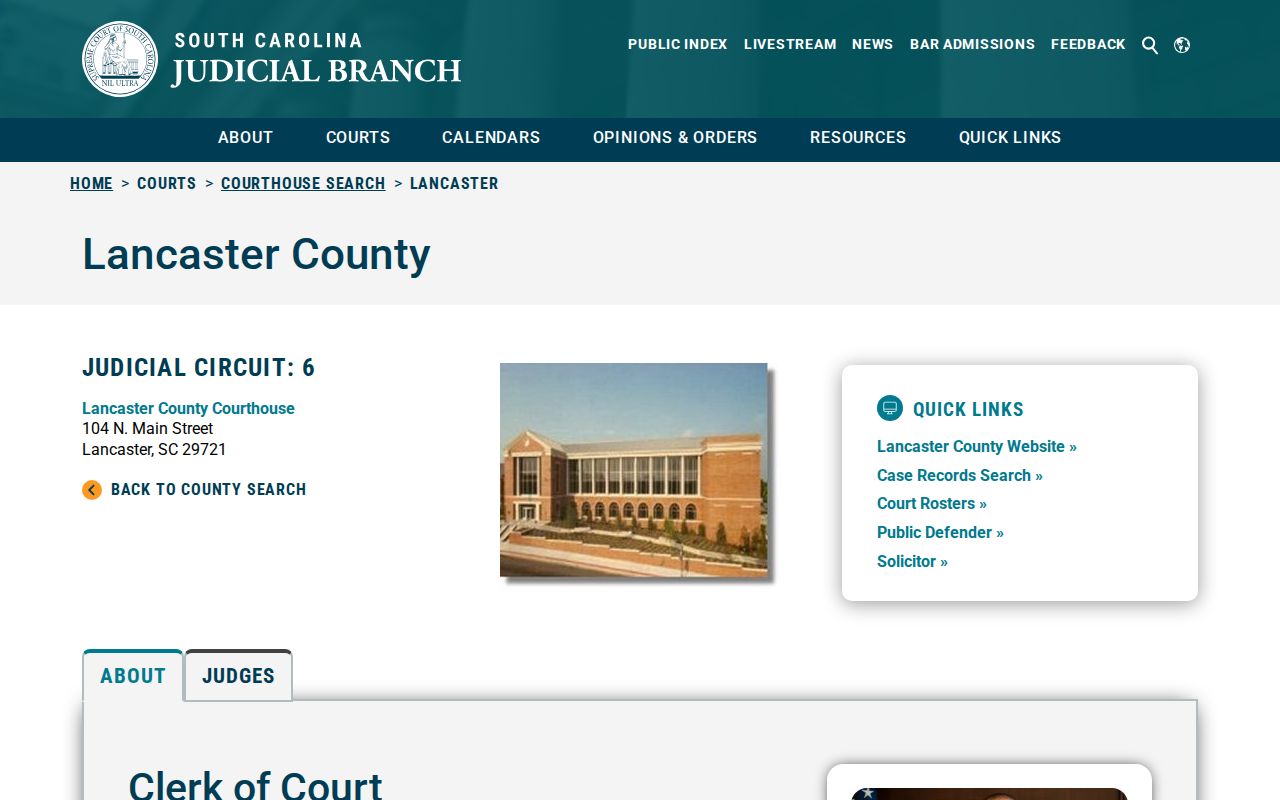
The directory reinforces that the Clerk, Magistrate, Municipal Court, and Solicitor perform separate jobs even when their records concern the same event.
How to Search Case Records
Begin with the Lancaster Trial Court Public Index. It is free, but browsers must allow cookies, JavaScript, and case-detail pop-ups. Name variation can hide a result. A full case number is often more precise, especially when the name is common.
- Open the Lancaster Public Index and select the appropriate court or criminal case type.
- Search by party name or the full case number. Try known name variants if the first search fails.
- Check the filing year, court code, and charge so a similar name is not mistaken for the right case.
- Open the event history and read the current status, disposition, hearings, and available document links.
- Ask the proper clerk by phone, at the counter, or by mail for an absent image, older file, plain copy, or certified copy.
| Search route | Input | Use | Format note |
|---|---|---|---|
| Party search | Name | Find cases without a number | Try legal names and known variants |
| General Sessions number | Case number | Direct case match | yyyyGS29xxxxx |
| Summary number | Case number | Magistrate case match | yyyyA29xxxxxxxx |
| Case detail | Selected result | Read status and docket events | Pop-ups may need permission |
Decode Lancaster County Criminal Case Numbers
Lancaster County General Sessions numbers follow a stable pattern: a four-digit year, the letters GS, county code 29, and a five-digit identifier. A number beginning with 2026GS29 therefore points to a Lancaster General Sessions filing from 2026. Summary cases use a different pattern with the filing year, the letter A, county code 29, and an eight-digit identifier.
The code identifies the filing track. It does not reveal guilt, custody, or whether a warrant remains active. Those conclusions require the docket events and the final disposition. The Judicial Branch's Public Index search help is the official reference when a number will not parse or a search field behaves unexpectedly.
Note: A Lancaster County case number narrows the file, but the docket and final order supply its meaning.
What the Case File Shows
A Lancaster County criminal case file is case-centered. It links the filed charge to hearings, attorneys, motions, pleas, court decisions, and the sentence. This differs from a SLED CATCH record, which is identity-centered, and a jail record, which centers on booking and custody. Online images depend on e-filing and local availability, so the field list may be fuller than the set of downloadable papers.
| Case Number & Court | Identifies the filing year, court track, county code, and specific case. |
|---|---|
| Charging Document | Shows the complaint, warrant, or indictment that placed a charge before the court. |
| Docket Entries | Lists filings, motions, hearings, orders, and other actions in date order. |
| Hearing Dates | Records scheduled and completed court events where the public index displays them. |
| Disposition & Judgment | Shows whether a charge remains pending or ended by plea, trial, dismissal, acquittal, or another result. |
| Sentence & Conditions | Records the court-imposed consequence after a conviction when entered in the file. |
The Clerk of Court source also illustrates where General Sessions files are kept.
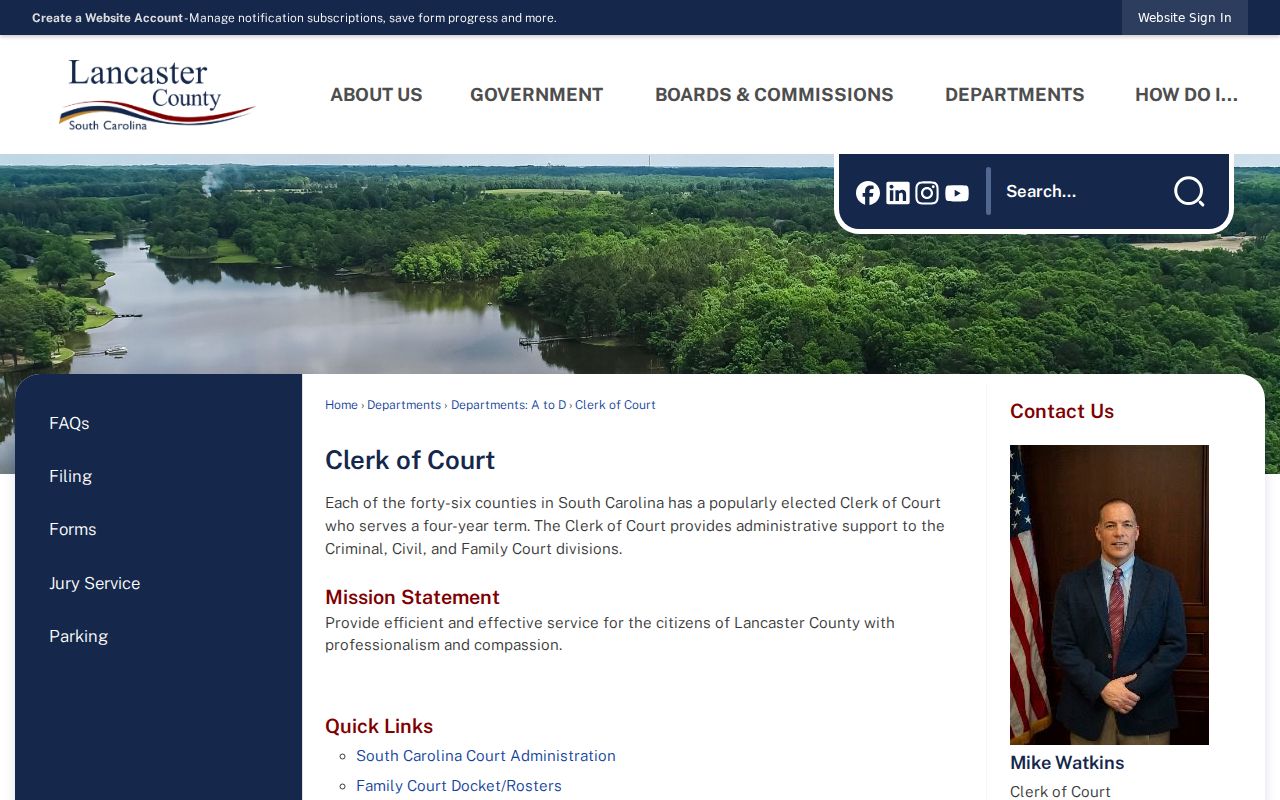
That office is the direct county source for a court copy when the electronic case view is incomplete.
Missing Lancaster County Criminal Docket Images
A search result can exist even when no pleading or order image is available. The index may hold the event line while an older paper, a locally stored image, or a nonparticipating municipal file remains off the public web view. First record the case number, court, document title, and event date. Then contact the clerk that owns that docket.
As researched August 8, 2026, Lancaster County General Sessions plain copies cost $0.25 per page and certified copies cost $2.50. Certification matters when an official copy is required; a screen print is not the same product. The county's filing and copy-fee page is the source for those charges.
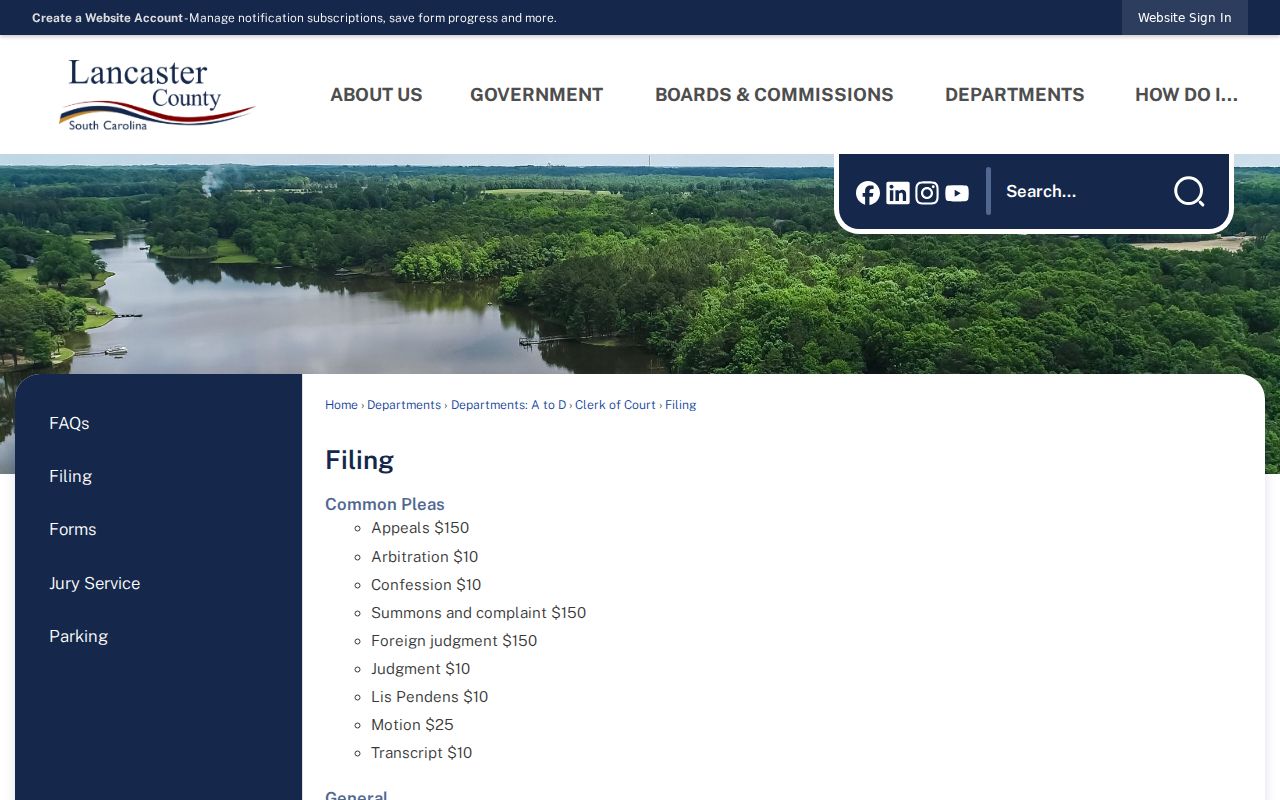
The fee page helps separate a low-cost plain page from the certified court record needed for formal use.
Stages of a Criminal Case
A Lancaster County case may begin with an arrest or summons. A detained person then receives a bond hearing through Magistrate Court. A higher charge can move from complaint and preliminary process to a General Sessions indictment, followed by arraignment, pretrial motions, a plea or trial, disposition, and sentencing. Not every matter reaches each stage. A dismissal can stop the case, and a grand jury no bill declines an indictment.
Case flow: Charges Filed › Arraignment › Pretrial › Plea or Trial › Disposition › Sentencing
The Magistrate Court divisions page shows how bond, preliminary hearings, and summary criminal work fit into this path.
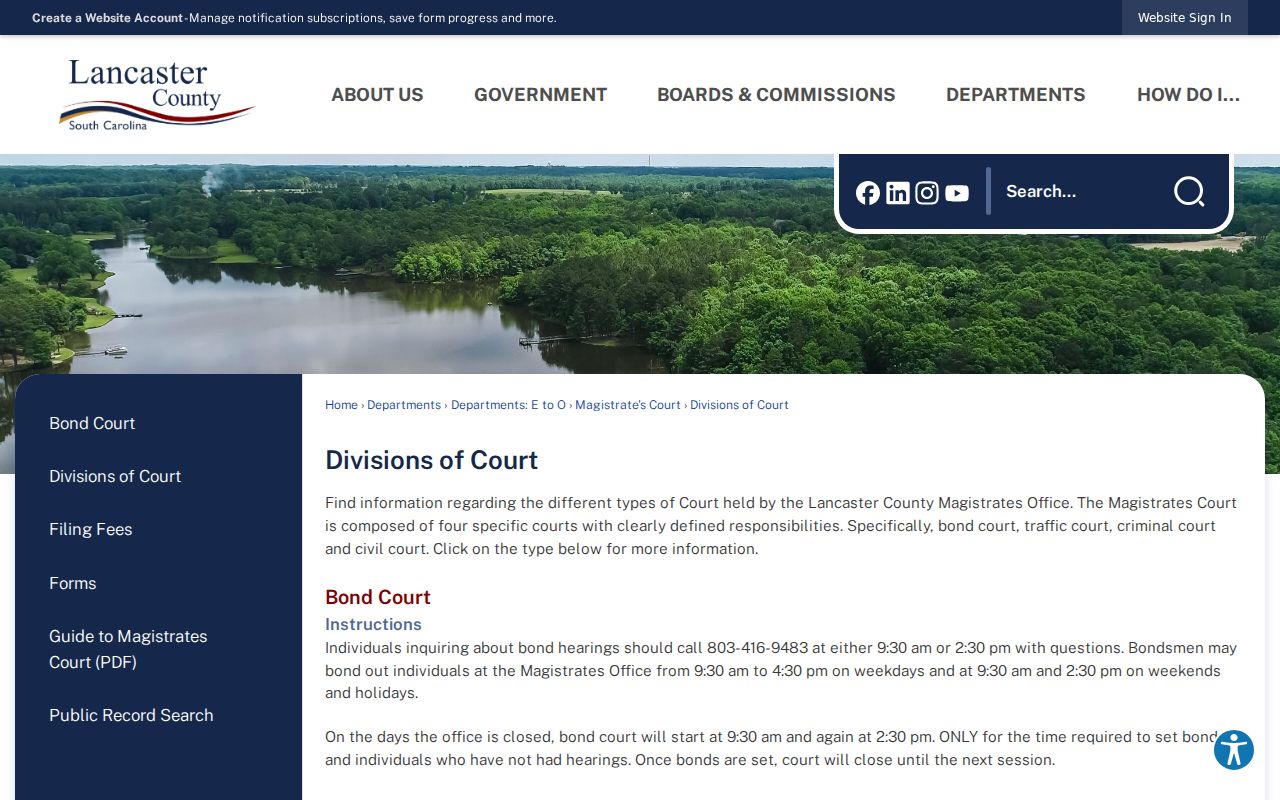
This lower-court layer explains why a bond or preliminary event may appear before a Sixth Circuit General Sessions case develops.
Read Lancaster County Criminal Case Outcomes
Disposition is the result for a specific charge. Pending or open means the court has not recorded a final result. Nol prossed means the prosecutor stopped pursuing that charge. A dismissal also ends the charge without a conviction, while an acquittal is a not-guilty judgment. A conviction is a guilty adjudication; under some South Carolina statutes, a guilty or no-contest plea and bond forfeiture can also affect later relief.
- True bill
- The grand jury approves an indictment.
- No bill
- The grand jury declines to indict on the presented charge.
- Arraignment
- The charge is stated and a plea is entered.
- Disposition
- The final or current outcome of a charge.
A qualifying dismissal, acquittal, or completed diversion may support expungement, but it does not prove that every linked record vanished at once. The Sixth Circuit expungement guidance explains the local route.
The local guidance connects the recorded case outcome to eligibility checks, fees where applicable, and agency processing.
Access & Restrictions
South Carolina courts provide broad public docket access, but public access is not unlimited. Juvenile matters, protected victim or minor data, sealed investigative material, private identifiers, and expunged records can be restricted or removed from ordinary view. Since January 1, 2026, home addresses have been removed from old and new Public Index cases statewide. A redacted online entry should not be treated as evidence that no fuller protected court record exists.
The South Carolina Freedom of Information Act governs many agency records, yet the court clerk remains the usual direct route for court copies. FOIA does not convert the sheriff's report, jail booking, and court docket into one file. When an online search fails, use the case number and filing court to ask the correct clerk what public copy is available.
Lancaster County Veterans Court Case Path
The Sixth Circuit Veterans Court offers a distinct route for qualifying military veterans. Participants make judicial appearances and complete treatment, testing, assignments, and team review. Successful graduation dismisses the charge and makes it eligible for expungement. Failure can return the criminal case for sentence or incarceration, so entry does not itself erase the docket.
The official Sixth Circuit Veterans Court source documents the program and its court-centered process.
This local program shows why the final disposition, not the initial charge alone, is essential when reading Lancaster County criminal court records.